Monday, 16 August 2021

Erisseri.


Erisseri, a traditional Kerala  dish made with pumpkin, raw banana, yam, and coconut.


ERISSERY


 Pumpkin,raw banana,elephant yam            2 cups
(sliced)
Turmeric powder                                              ¼ teaspoon
Chilly powder                                                    ½ teaspoon
Coriander powder                                           ½ teaspoon
Cumin seed                                                        ¼ teaspoon
Garlic                                                                  2 pieces
Grated coconut                                                  ½ cup
Oil                                                                  2 desert spoons
Mustard                                                        1 teaspoon
Onion                                                            1 teaspoon
Red chilly                                                   2 (cut each into 3 pieces)
Grated coconut                                          2 desert spoon
Curry leaves                                                        accordingly
Salt                                                                      accordingly
Cook sliced pumpkin,raw banana and elephant yam with salt & water. Grind turmeric powder, chilly powder,coriander powder, cumin seed, garlic & ½ cup grated coconut. Add this mixture to cooked vegetable and boil. Add some boiled water to make enough gravy. Heat oil. Fry mustard. Add red chilly, onion, grated coconut, curry leaves. Fry till it becomes golden brown. Add this to pumpkin mixture. Serve hot.


Friday, 13 August 2021

Papaya- carrot thoran.


Papaya-carrot thoran, a Kerala-style stir-fried dish with grated papaya, carrot, and coconut


Ingredients:


Papaya-Carrot Thoran

Grated papaya                     1 cup
Grated carrot                        ½ cup
Grated coconut                     ¼ cup
Sliced chilly                            1 teaspoon
Sliced onion                           1 spoon
Pepper powder                      ½ teaspoon
Turmeric powder                  ¼ teaspoon
Oil                                           I spoon
Mustard                                 ¼ teaspoon
Curry leaves & salt               accordingly

Heat oil. Add mustard, when it sputters, add onion, chilly, curry leaves, stir well, add pepper and turmeric powder, stir, add coconut, papaya, carrot,  and salt one by one. Stir well for two minutes. Remove from heat.


Wednesday, 11 August 2021

Vegetable salad.


Fresh vegetable salad with carrot, cabbage, capsicum, and a tomato rose garnish.


Ingredients:

Carrot.                       1

Cabbage.                    100gm.

Onion.                         Half.

Green chili.                1     

Capsicum.                   Half. 

Lemon juice.              1 teaspoon

Honey.                         1 teaspoon   

Salt.                               a pinch.  

Coriander leaves.       Accordingly.

Slice carrot,cabbage, onion, capsicum and chilli. Mix lemon juice and honey by shaking well.Mix all together.Add salt.Spread coriander leaves. Decorate with a tomato rose.


Rava vada.


Rava vada, a crispy South Indian snack made with semolina, onion, and green chilli

Rava Vada

Rava                1 cup
Onion              1/2 cup
Green chilli      2
Ginger              1 teaspoon
Salt                    a pinch 
Water                 Accordingly
Oil                     1 cup

        Slice onion,chilly and ginger into small pieces.Mix them with rava,water,and salt.Knead to make small balls.Just spread  in the shape of vada and fry.

Monday, 9 August 2021

Sunset at Kuzhuppilly beach,Kochi.


Sunset at Kuzhuppilly Beach.

As the day gently comes to an end, Kuzhuppilly Beach is painted in warm shades of gold and orange. 

The sun slowly sinks into the Arabian Sea, while the waves roll softly onto the shore. 

The peaceful surroundings, cool sea breeze, and glowing evening sky create a beautiful moment of serenity - perfect for enjoying nature and watching the sunset.


Golden sunset over Kuzhuppilly Beach, Kochi, with the sun dipping toward the Arabian Sea horizon.


Waves rolling onto Kuzhuppilly Beach shoreline under a glowing orange evening sky.


Sunday, 1 August 2021

Chocolate Pastry.


Homemade chocolate pastry topped with whipped cream and cherries.


Ingredients.

Maida.                         100gm

Sugar.                            100gm.

Egg.                                 2.

Sunflower oil.                   50 ml.

Vanilla essence.               1/2 teaspoon.

Baking powder.                  1/2 teaspoon.

Baking soda.                       1/4 teaspoon.

Cocoa powder.                     1 teaspoon.

Whipping cream.                 50 ml.

Cherry.                                   50 gm.

Sugar syrup.                         3 tablespoons.

Beat egg.Add sugar,beat well.Add vanilla essence.stir well.Add sunflower oil,mix well.

Mix flour, baking powder, baking soda, cocoa powder and sieve.Add this to the sugar -egg mix and beat well.Add cocoa powder,mix well.

Bake in a 180°pre-heated oven for 35 minutes.

Allow natural cooling.

Beat whipping cream to stiff peaks.

Layer the cake, soften with sugar syrup,apply whipping cream.

Decorate with cherries.

Refrigerate for two hours to set the cake.


Red Fort.


Red Fort, Lal Qila, in Old Delhi — red sandstone Mughal fortress built by Shah Jahan.


Red Fort - A Magnificent Symbol of India’s History.


The Ref Fort, also known as Lal Qila, is one of the most famous historical monuments in India. Located in Old Delhi, it was built by the Mughal emperor Shah Jahan as the main residence of the Mughal emperors after he moved his capital from Agra to Delhi. The construction began in 1638 and the fort was substantially completed in 1648.

The fort gets its popular name from its enormous walls made primarily of red sandstone. These imposing walls stretch for about 2.5 kilometres and rise to different heights depending on the surrounding landscape.

 The architecture combines the elements of Mughal, Persian, Timurid and Indian traditions, creating a distinctive and elegant style.

The Main Entrance – Lahore Gate.

One of the most recognizable features of the Red Fort is the magnificent Lahore Gate. It is named because the historic route from Delhi led toward Lahore.

 The gate is an impressive example of Mughal defensive architecture, with its massive walls and imposing towers.

Today, the Lahore Gate has special national significance. Every year on 15 August, India's Independence Day, the Prime Minister addresses the nation from the Red Fort and hoists the Indian national flag, making the monument an important symbol of India's independence and sovereignty.

Chatta Chowk.

After entering through the Lahore Gate, visitors encounter Chatta Chowk, a covered marketplace that was once known as the Meena Bazaar. 

During the Mughal period, merchants sold jewellery, textiles, handicrafts and other luxury goods here. Its covered passage gives visitors a glimpse of the commercial life that existed within the royal complex.

Diwan-i-Aam.

The Diwan-i-Aam, or Hall of Public Audience, was where the emperor received ordinary subjects and listened to their petitions and grievances. 

The hall demonstrates the grandeur of Mughal court life while also reflecting the emperor's role as the supreme authority of the empire.

A beautifully decorated throne alcove is located at the rear of the hall, where the emperor would appear before those seeking his attention.

Diwan-i-Khas.

The Diwan-i-Khas, or Hall of Private Audience, was reserved for important guests, nobles and officials. It is more richly decorated than the Diwan-i-Aam, featuring elegant marble work, delicate ornamentation and inscriptions.

The famous Peacock Throne was originally associated with this hall. The throne was renowned for its extraordinary richness and craftsmanship, although it was later taken away from Delhi.

The Royal Apartments.

Beyond the audience halls were the private residential areas of the Mughal royal family. The complex included palaces, chambers, gardens, pavilions and water channels. 

The Nahr-i-Bihisht, meaning Stream of Paradise, carried water through parts of the palace complex, reflecting the Mughal love of gardens, flowing water and symmetrical design.

The royal apartments were designed not only for comfort but also to create an atmosphere of beauty and refinement. Marble, carved stone, decorative panels and intricate patterns were used throughout the palace buildings.

Moti Masjid.

The fort also contains the beautiful Moti Masjid, or Pearl Mosque. Built by Emperor Aurangzeb, this small white-marble mosque contrasts strongly with the red sandstone walls of the fort. Its simple yet elegant design reflects the refinement of Mughal religious architecture.

Hayat Bakhsh Bagh.

The Red Fort once contained extensive gardens, including the Hayat Bakhsh Bagh, meaning Life-Bestowing Garden. 

Water channels, pools and pavilions contributed to the peaceful atmosphere of these royal gardens. 

The layout reflects the traditional Mughal concept of the charbagh, a formal garden divided into symmetrical sections.

A Witness to History.

The Red Fort has witnessed several important periods in Indian history. It served as the centre of Mughal power for generations and later came under British control.

 The fort also became associated with the final years of the Mughal Empire and the events surrounding the Indian Rebellion of 1857.

After India became independent in 1947, the Red Fort acquired a new national meaning. The first Prime Minister, Jawaharlal Nehru, hoisted the Indian national flag there on 15 August 1947. Since then, the annual Independence Day ceremony at the fort has become an important national tradition.

UNESCO World Heritage Site

The Red Fort was designated a UNESCO World Heritage Site in 2007 because of its outstanding architectural and historical significance. 

It is regarded as an important example of the development of Mughal architecture and urban planning.

Today, the Red Fort attracts visitors from India and around the world. Its massive red walls, grand gateways, marble halls, gardens and historic atmosphere provide a remarkable window into India's past.

The Red Fort is more than a magnificent monument - it is a place where Mughal heritage, architectural excellence and India's modern history come together.

Its enduring presence in the heart of Delhi makes it one of India's most treasured historical landmarks.


View of the Red Fort's red sandstone walls and gateway, Old Delhi, India.


Saturday, 31 July 2021

Banana Pudding.


Homemade banana pudding topped with fresh banana slices and seedless grapes.


Ingredients

Sliced banana      2 cups

Ghee                      1 spoon

Sugar                     ¼ cup

Water                    ½ cup

Egg                         2

Milk                        2 cups

Powdered

Cardamom            ¼ teaspoon

Vanilla essence     ½ teaspoon


Fry banana in ghee.  Heat a pan, caramelise sugar with water. Mix egg and milk well. Add cardamom powder, vanilla essence and caramelised sugar to fried banana. Bake or steam to cook.  Allow to cool. Put it upside down in a plate. Garnish with sliced seedless grapes and banana pieces.    


Friday, 30 July 2021

Bengal clockvine.(Bengal trumpet)


Bengal clockvine (Bengal trumpet) purple flowering vine with heart-shaped leaves.


Bengal clockvine. A purple flowering tropical vine.

And an evergreen vine.

Native to China,India,Nepal, Bangladesh, Myanmar & Indo China.

Other names :

Bengal trumpet, blue sky flower, blue thunbergia,blue trumpet vine, clockvine,sky flower,sky vine.

A house plant in temperate regions.

Bengal clockvine (Thunbergia grandiflora) is a vigorous, evergreen climbing plant native to parts of South and Southeast Asia. It is also commonly called blue trumpet vine because of its beautiful, trumpet-shaped flowers.

Plant type: Perennial climbing vine.

Flowers: Usually lavender-blue or bluish-purple, with a pale or yellowish throat.

Leaves: Large, green and slightly heart-shaped.

Light: Prefers full sun to partial shade.

Water: Regular watering, especially during dry periods.

Propagation: Commonly grown from stem cuttings.

Uses: Excellent for covering fences, trellises, arches and walls.

It grows rapidly in warm, humid climates and can create a lush curtain of foliage and flowers. Because of its vigorous growth, it is best given strong support and regular pruning.


Wednesday, 28 July 2021

Banana Halva.


Homemade banana halva squares garnished with cherries, served on a plate


Ingredients:

Ripe banana.                       3-5

Ghee/Vanaspati                   50ml

Sugar.                                   50 gm 

Cornflour.                            3 tablespoons 

Cherry.                                 5

Cardamom powder.          1/2 teaspoon.

Heat a pan.Add ghee, sliced Banana,stir to cook and mash.Add sugar and stir.Mix cornflour in half cup of water and add.Stir all ingredients well to make thick.Add cardamom powder.Remove from heat.Apply a little ghee in a tray, spread the mixture and level.

Allow to cool.Cut into pieces.Garnish with cherry.


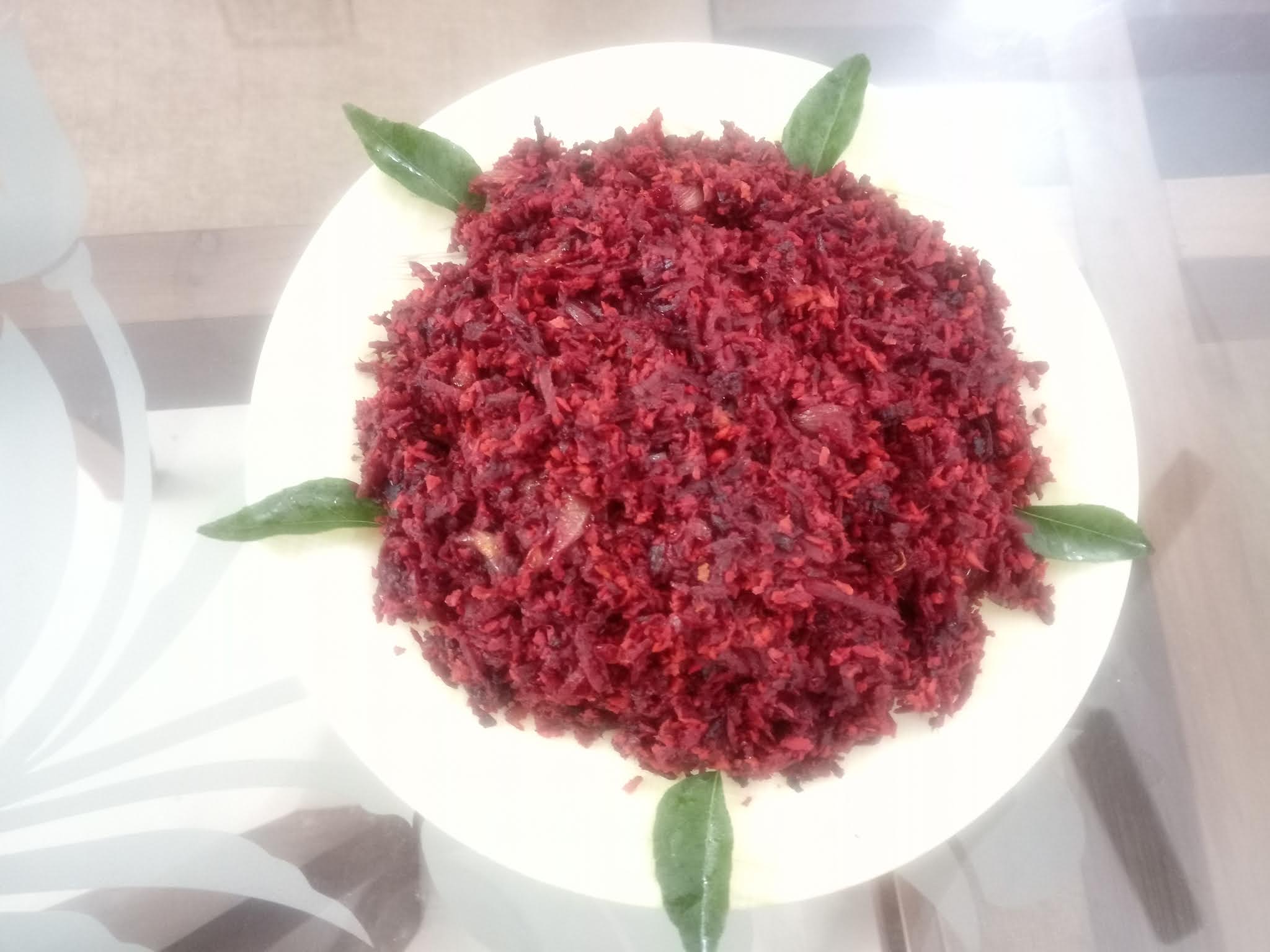
Beetroot Thoran


Grated beetroot thoran stir-fried with coconut and curry leaves in a pan


Ingredients:

Beetroot.                                   200gm 

Grated coconut.                        50 gm 

Chilli powder.                             1 teaspoon 

Pepper powder.                         1/2 teaspoon 

Turmeric powder.                      1/4 teaspoon 

Onion.                                           1/2

Garlic.                                            2 petals. 

Coconut oil.                                  1 teaspoon 

Malabar tamarind 

(Indian garcina).                          A pinch.

Salt.                                                 A pinch.

Curry leaves.                                  5-6

Grate beetroot.Slice onions and garlic.

Heat a pan.Add oil. Fry onions and garlic.Add curry leaves, chilli, pepper, turmeric Powder, stir well.Add grated coconut.Add grated beetroot and salt and Indian garcina. Stir well, cover the pan with a lid and cook for 2-3 minutes.Serve hot.


Tuesday, 27 July 2021

Carrot Rice.


Carrot rice with basmati rice, carrots, onions, raisins, nuts and coriander garnish


Ingredients:


Basmati rice                       2 cups
Carrot                                 50 gm.
Sliced onion                       50 gm.
Raisin                                 1 spoon
Nuts                                    1 spoon
Cardamom                          3
Salt                                       accordingly
Ghee                                     ½ cup
Coriander leaves                  accordingly
Sliced tomato                       ½ cup
Water                                    4 cups

Wash and drain basmati rice. Heat a pan. Pour one spoon ghee and fry rice. Keep it aside. Boil water. Add basmati rice, salt and mashed cardamom. Cook for ten minutes.  In a pan, heat one spoon ghee, fry onion,carrot,raisins and nuts.Serve cooked rice in a plate garnishing with coriander leaves, sliced tomato, roasted onions, carrot, raisins and nuts.

Fish cutlets.


Crispy homemade fish cutlets made with seasoned fish, potatoes and spices


Ingredients:


Fish                                ½ kg
Vinegar                          1 teaspoon
Salt                                 1 teaspoon
Oil                                    ¼ cup
Sliced onion                  ½ cup
Sliced green chilly        1 desert spoon
Sliced ginger                 1 teaspoon
Sliced curry leaves        ½ teaspoon
Pepper powder             1 teaspoon
Boiled and mashed
Potato                             1 cup
Salt                                   accordingly
Egg yolk                            1
Egg white                         1
Bread powder                  ½ cup

Marinate fish with vinegar and salt. Steam it and mash. Heat oil, add onion, chilly, ginger and roast. Add pepper powder and fish mixture. Add potato, egg yolk, salt and mix well. Shape to cutlets, dip in egg white and again in bread powder and fry. Serve with sauce and salad.

Monday, 26 July 2021

Rambutans.


Rambutan fruits kept in a basket.


Rambutan Fruit and Its Nutritional Value

Rambutan is a tropical fruit known for its bright red or yellow skin covered with soft, hair-like spines.

 Its juicy, translucent-white flesh has a mildly sweet and refreshing taste. Rambutan is a good source of vitamin C, which supports normal immune function and helps protect cells from oxidative stress.

 It also provides copper, manganese, potassium, and small amounts of dietary fiber. 

The fruit contains naturally occurring antioxidants and carbohydrates that provide energy. 

Rambutan can be enjoyed fresh, but the skin and seed are generally not eaten. As with any fruit, it is best enjoyed as part of a varied and balanced diet.


Rambutan is commonly eaten fresh, after removing the hairy skin and seed. 

The fruit can also be added to fruit salads, desserts, juices, smoothies, jams, and preserves. 

Canned rambutan is sometimes used in sweet dishes and beverages. The fruit is particularly refreshing when served chilled, making it a popular tropical delicacy.


Conditions for Growing Rambutan

Rambutan is a tropical fruit tree that grows best in warm, humid conditions.

Climate: Warm and humid tropical climate; it does not tolerate frost or prolonged cold.

Temperature: Ideally around 22 - 30°C for healthy growth.

Sunlight: Requires full sun to partial shade, with good sunlight for fruit production.

Soil: Deep, fertile, well-drained soil rich in organic matter. Slightly acidic soil is preferred.

Water: Needs regular and adequate moisture, especially during flowering and fruit development, but waterlogging should be avoided.

Rainfall: Performs well with abundant, well-distributed rainfall and high humidity.

Wind: Protection from strong winds is helpful because young trees and branches can be damaged.

Space: Rambutan develops into a fairly large tree, so it needs sufficient space for its canopy and roots.

With suitable warmth, moisture, soil, and sunlight, a rambutan tree can grow vigorously and produce clusters of its distinctive, hairy fruits.


Red and sweet rambutan fruits after harvest.

Carrot cake.


Moist homemade carrot cake topped with almonds.


Ingredients.

Carrot (grated).                       150gm

Maida.                                        150gm

Sugar.                                         300gm     

Egg.                                             3

Vanilla essence.                        1 teaspoon

Cocoa powder.                           3 teaspoon

Baking powder.                           1 teaspoon

Baking soda.                                1/2 teaspoon

Sunflower oil.                                50 ml 

Cloves, cinnamon,nutmeg 

(Powdered together).                   1/2 teaspoon

Vinegar.                                           1 teaspoon

Baking soda.( to mix with vinegar). 1/2 teaspoon 

Beat egg.Add powdered sugar.Beat again.

Add vanilla essence.Beat well.

Mix sunflower oil.

Sieve together maida, baking powder, baking soda, cocoa powder,garam masala powder and add to the batter.Add 1/2 teaspoon baking soda to 1 teaspoon vinegar,then add to the batter.

Mix all ingredients well.Add grated carrots.Stir well to mix.

Bake in a 180°pre-heated oven for 42 minutes.